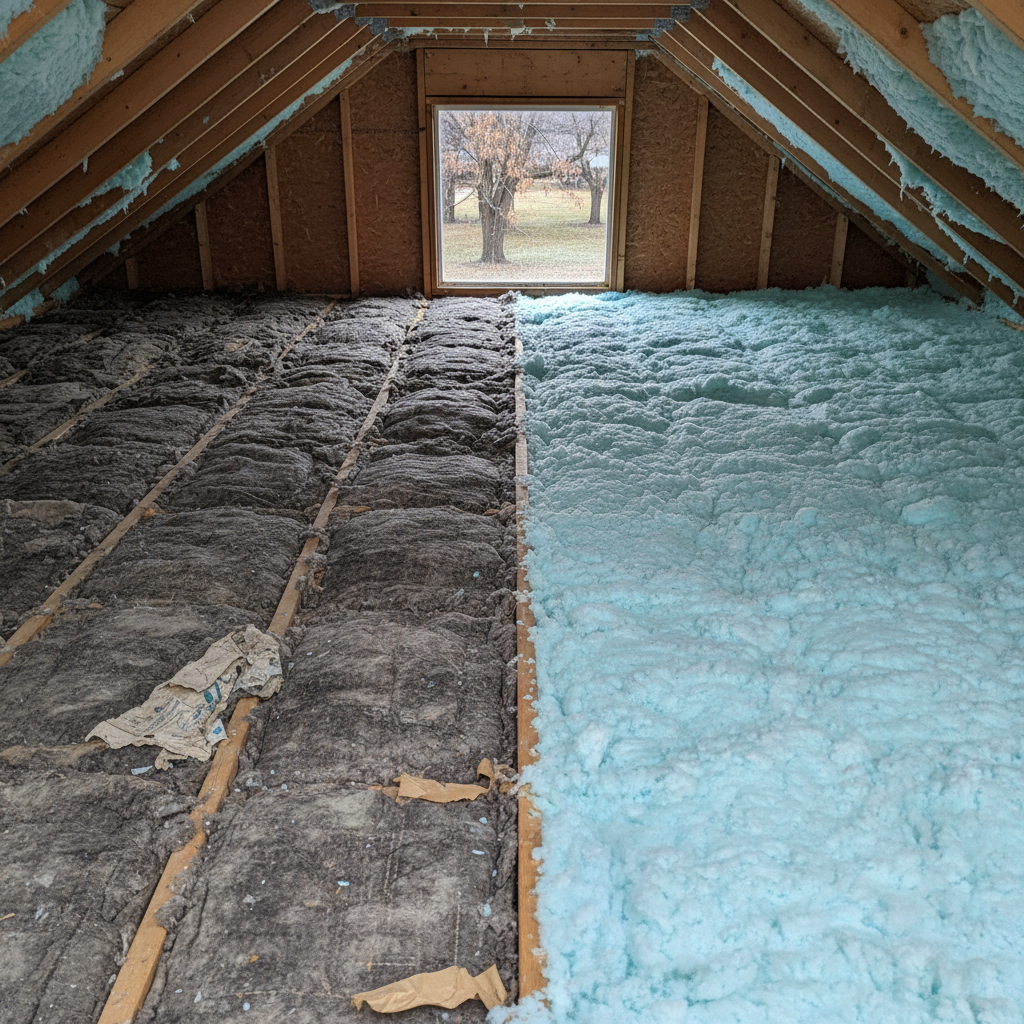
Alright, so you're thinking about upgrading your insulation, probably because your energy bills are making your eyes water or you're just plain tired of drafts. Good for you. When it comes to blown-in insulation, you've mainly got two ways we can go about it: loose-fill or dense-pack. Both use the same materials, usually cellulose or fiberglass, but how we get them into your home makes a big difference. Let's talk about what those differences mean for your Elgin place.
Loose-Fill Blown-In Insulation: The Attic Standard
Loose-fill is probably what most folks picture when they think about blown-in insulation. We use a big hose and blow the material, whether it's cellulose or fiberglass, into your attic. It settles down, creating a nice, fluffy blanket of insulation. This method is fantastic for attics because it can get into all those nooks and crannies that batts just can't reach, especially around recessed lights or oddly shaped joists. Often, it's the quickest and most cost-effective way to boost your attic's R-value.
Cost: Generally, loose-fill costs less to install per square foot than dense-pack. It's a faster process, and it doesn't require as much prep work in terms of sealing up cavities.
Durability: It holds up well in attics, but it's not meant to be walked on. If you've got a lot of foot traffic up there, you'll compact it, and that kills its insulating power. Also, if you have roof leaks, it can get wet. Cellulose can lose R-value if it gets soaked and then dries out, and fiberglass can too, though it's less prone to mold. Pests can also tunnel through it, which is a pain, but that's an issue with any insulation if you've got an infestation, right?
Maintenance: Pretty low maintenance, honestly. Just don't disturb it. If you need to access something in the attic, you'll need to carefully move it aside and then fluff it back up when you're done. If it settles over time, which it can, you might need to top it off years down the line. But modern materials are much better at resisting settling than they used to be.
Appearance: It looks like a big, fluffy cloud. Not exactly decorative, but it's in your attic, so who cares? The main thing is that it creates a continuous layer, which is key for thermal performance.
Dense-Pack Blown-In Insulation: Walls and Tricky Spots
Now, dense-pack is a whole different animal. We're talking about blowing insulation into enclosed cavities, like the empty space inside your exterior walls. We drill small holes, usually from the outside, and then use specialized equipment to blow the insulation in at a much higher density and pressure. This packs the material in tight, so it fills every void and doesn't settle over time. It's a game-changer for older homes in Elgin, especially those with balloon framing where you've got open wall cavities from the basement to the attic.
Cost: Dense-pack is more labor-intensive and requires more material per cubic foot, so it's typically more expensive upfront than loose-fill. We've got to drill holes, fill the cavity, and then patch those holes. It's a more involved process.
Durability: This is where dense-pack really shines. Because it's packed so tightly, it virtually eliminates air movement within the wall cavity, which is a huge source of heat loss. It won't settle, ever. It's also much more resistant to pests because it's so dense they can't easily tunnel through it. If you've got a moisture issue in your walls, that's a bigger problem than the insulation itself, and you'd need to fix the source regardless.
Maintenance: Once it's in, it's done. You don't maintain it. The only thing you'd ever do is if you needed to open up a wall for plumbing or electrical work; you'd have to cut out the insulation and then re-dense-pack that section.
Appearance: You don't see it at all. It's all hidden inside your walls. The only thing you'll see are the patched holes on your siding or exterior, which we match as closely as possible. Good patching is part of the job.
Which One For Your Elgin Home?
Honestly, it's not really an either/or situation; it's more about using the right tool for the job. Most homes need both.
- For your attic, especially if it's unfinished: Loose-fill is usually the way to go. It's efficient, cost-effective, and provides excellent coverage. We can get that R-value up to where it needs to be for our brutal Illinois winters and humid summers.
- For uninsulated exterior walls or sloped ceilings: Dense-pack is your champion. If your home was built before the 1970s, chances are your walls are empty. Dense-packing them will make a massive difference in comfort and energy bills. I've seen it transform drafty old homes in the Gifford Park neighborhood into cozy havens.
At New Look Insulation Co, we often recommend a combination. We'll seal up your attic air leaks, then blow in a thick layer of loose-fill. If your walls are empty, we'll dense-pack those too. This two-pronged approach gives you the best bang for your buck and makes your home truly comfortable year-round.
Don't just guess what you need. Give us a call. We'll come out, take a look, and tell you straight what we think will make the biggest difference for your specific home and budget. No pressure, just honest advice from someone who's been doing this in Elgin for a long time.