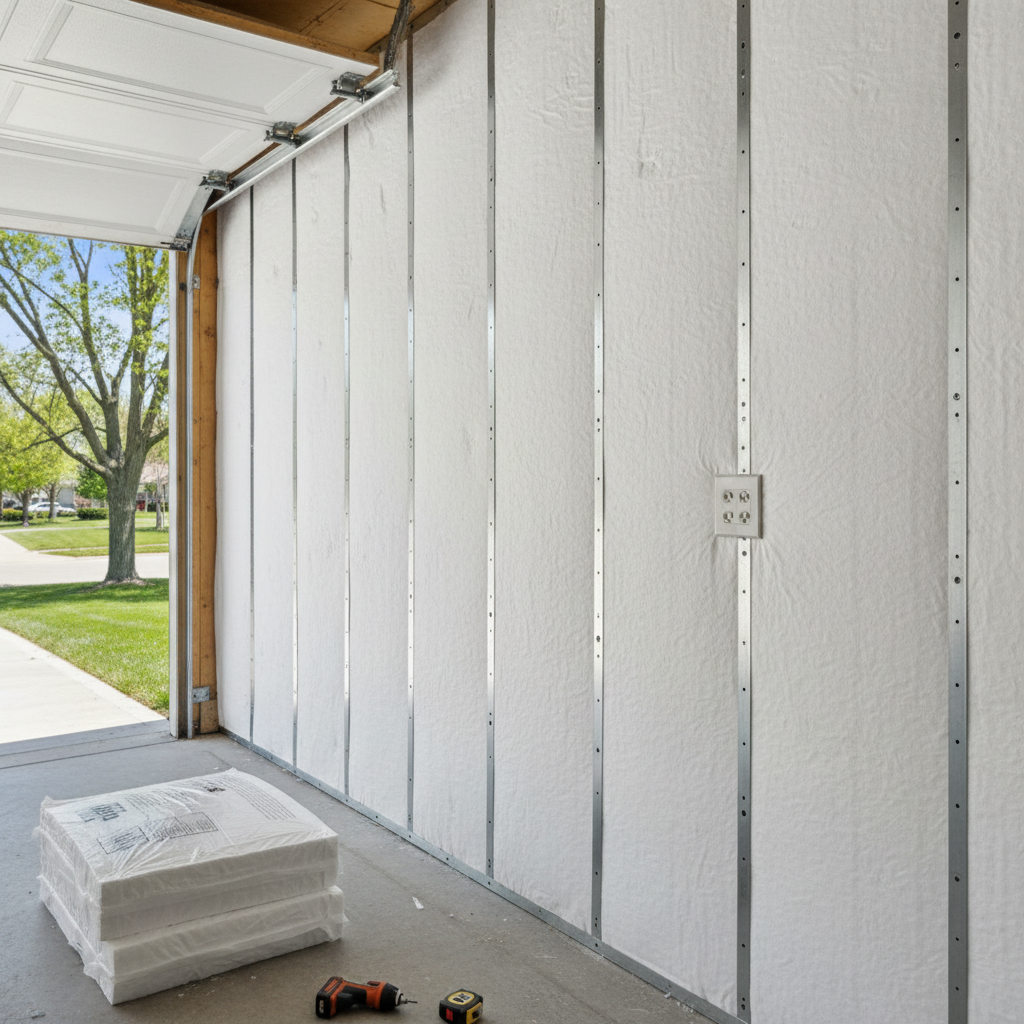
You're probably wondering if insulating your garage is even worth it. I get it. It seems like a big project for a space that's often just for cars and storage. But here in Elgin, with our wild temperature swings, a well-insulated garage can make a huge difference. I've been doing this for years, and I've seen firsthand how much more comfortable and functional a garage becomes once it's properly insulated. Let's tackle some of the common questions I get about garage insulation.
Do I really need to insulate my garage?
Look, if you're just parking your car in there and never step foot in it otherwise, maybe not. But most folks use their garage for more than just parking. It's a workshop, a storage area, a gym, or even a main entry point into your house. If you've got a finished room above your garage, or a bedroom right next to it, you're definitely losing a lot of heat in the winter and gaining a lot of heat in the summer through those uninsulated walls and ceiling. I've worked on homes in older neighborhoods like the Bluff City area where garages are often attached to the main living space, and the difference insulation makes to the comfort of the adjacent rooms is huge. It's not just about the garage itself; it's about your whole home's energy efficiency and comfort.
What parts of the garage should I insulate?
You want to think about the entire envelope. That means the walls, the ceiling, and even the garage door itself. The walls are usually the biggest priority, especially if they're shared with your living space. The ceiling is crucial too, particularly if you have a room above it. Don't forget the garage door. It's a massive opening to the outside, and even a well-insulated wall won't do much good if your door is just a thin sheet of metal. We often recommend a good R-value for the door itself, or adding insulation panels to an existing door. The floor? Not so much, unless you're pouring a new slab and want to add rigid foam underneath, which is a whole different ballgame.
What's the best insulation for a garage?
There's no single 'best' for every situation, but here's what we typically recommend. For walls and ceilings, batt insulation (fiberglass or mineral wool) is a common and cost-effective choice if you've got open stud bays. It's relatively easy to install and provides good thermal resistance. If you want something more effective, especially for air sealing, spray foam insulation is fantastic. It fills every nook and cranny, creating an airtight barrier that batt insulation can't match. It's more expensive upfront, true, but the energy savings can be significant. For the garage door, you can get pre-insulated doors, or if you have an existing door, we can install rigid foam panels on the inside. It really depends on your budget and how much you plan to use the space.
Will insulating my garage make it too hot or too cold?
No, it'll make it *more stable*. That's the whole point. In the summer, it'll keep the scorching heat out, making it much cooler than an uninsulated garage. In the winter, it'll hold onto any heat you generate in there, or prevent the freezing cold from seeping into your house. Think of it like a thermos. It doesn't heat or cool the liquid, it just maintains its temperature better. If you're planning on heating or cooling your garage, insulation is absolutely essential to make that system work efficiently.
How much does garage insulation cost?
This is the million-dollar question, and it really depends on a few factors. Are we talking about just the garage door, or the walls and ceiling too? What type of insulation are you looking at – batt, spray foam, or rigid panels? The size of your garage obviously plays a big role. Generally, you're looking at a few hundred dollars for just a garage door kit, up to several thousand for a full spray foam job on walls and ceiling. It's an investment, for sure, but one that pays off in comfort and lower energy bills, especially if your garage is attached to your home. We at New Look Insulation Co can give you a precise quote once we see your specific situation.
Can I insulate my garage myself?
You can, for sure. Many handy homeowners tackle batt insulation in walls themselves. It's not rocket science. But there are definitely things that can go wrong. Gaps, compression, and improper vapor barrier installation can really hurt performance. Spray foam is a whole different beast; that's almost always a job for professionals. If you're not confident in your DIY skills, or if you want the best possible performance, hiring a pro is always a good idea. We know the tricks to get it right and avoid common mistakes that lead to drafts or moisture issues.
What about moisture and ventilation in an insulated garage?
That's a smart question. Any time you seal up a space, you need to think about moisture. If you're parking a wet car in there all winter, or running power tools, you're introducing moisture. Good insulation helps prevent condensation by keeping surfaces warmer, but you still need some ventilation. A simple exhaust fan or even just opening the garage door for a bit can help. If you're doing a full spray foam job, we'll discuss ventilation strategies to make sure you don't trap moisture and create problems down the road. It's all about balance.
Insulating your garage isn't just about making the garage itself more comfortable; it's about improving your entire home's energy efficiency and comfort. If you're still on the fence, give us a call at New Look Insulation Co. We can come out, take a look, and give you an honest assessment of what makes sense for your Elgin home.