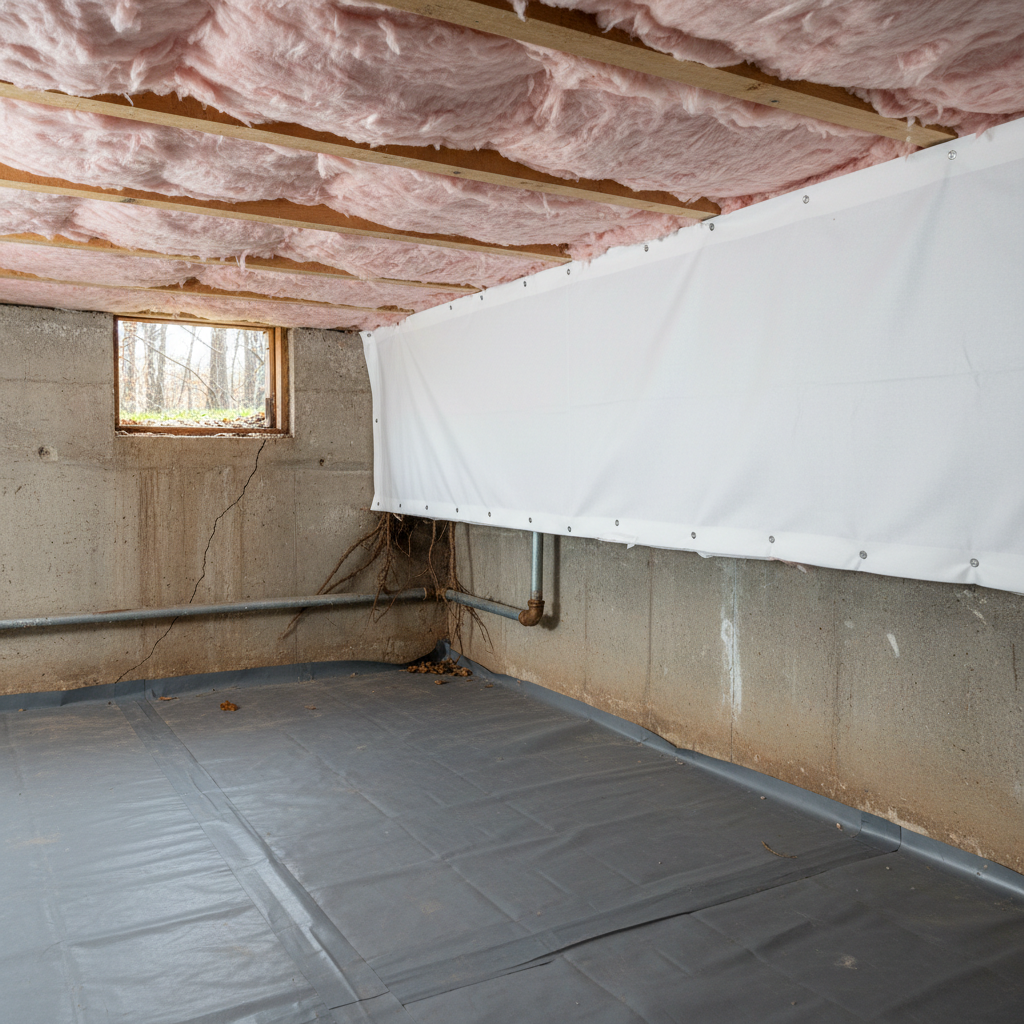
You wouldn't believe how many calls I get from folks right here in Elgin, complaining about cold floors. This is especially true for older homes, you know, the ones down by the river. They've cranked up the heat, sealed windows, done everything they can think of, but that chill just keeps creeping up from below. More often than not, the furnace isn't the problem; it's their crawl space. It's usually out of sight, out of mind for most people, but it actually plays a huge role in how comfortable your home is and how much energy it uses.
I'm Mike, owner of New Look Insulation Co., and I've been working on crawl spaces around here for years. Let's dig into the important stuff you need to know about insulating yours. I'll cover the questions I hear most often.
Why Even Bother Insulating My Crawl Space?
Look, your crawl space is basically a mini-basement. If it's not insulated right, it's a direct pipeline for outside air to get into your home. Here in Elgin, we get those really brutal winters and then those steamy summers. An uninsulated crawl space means cold air seeping up through your floors in January, and then humid, hot air making your AC work overtime come July. You're losing heat or AC right through your floorboards! This isn't just about comfort, though; it's about your energy bills. You're literally paying to heat or cool the outside world, which is just crazy.
Beyond energy, there's the moisture issue. Crawl spaces are notorious for getting damp, especially with our clay soil around here holding onto water. Insulation, particularly when you pair it with proper encapsulation, helps control that moisture. This cuts down on the risk of mold, mildew, and even pests that just love damp environments. It's a big deal for your home's health and, honestly, its structural integrity.
What's the Difference Between Floor Insulation and Crawl Space Wall Insulation?
This is a common one that confuses people. When we talk about insulating a crawl space, there are two main ways to go about it, and sometimes, you end up doing both. Floor insulation means we put insulation (usually batt insulation or spray foam) directly between the floor joists, right under your subfloor. This creates a thermal barrier between your living space and the crawl space itself.
Crawl space wall insulation, on the other hand, means insulating the perimeter walls of the crawl space. We often do this when we're 'conditioning' the crawl space, basically treating it as part of your home's conditioned envelope, instead of just an unvented outdoor space. This usually involves rigid foam boards or spray foam applied right to the foundation walls. Which method works best for you often depends on whether you're ventilating your crawl space or encapsulating it.
Should My Crawl Space Be Vented or Sealed?
For years, the standard practice was to vent crawl spaces. That meant having vents open to the outside, supposedly to let moisture escape. The idea sounded good, but in reality, it often made things worse. In summer, those vents let in hot, humid air, which then condenses on cooler surfaces inside the crawl space, leading to moisture problems. In winter? They let in freezing cold air, making your floors absolutely frigid.
Most building science experts now agree that sealing and conditioning a crawl space is the way to go, especially in our climate. This means closing off those vents, insulating the perimeter walls, sealing any air leaks, and often adding a vapor barrier on the ground. Sometimes, you'll even add a small dehumidifier or tie it into your HVAC system to keep the air dry. This approach creates a clean, dry, and much more energy-efficient space. It just makes sense, doesn't it?
What Type of Insulation is Best for a Crawl Space?
You've got a few choices, and each one has its good points and its bad points:
- Fiberglass Batts: These are common and pretty inexpensive. They fit between floor joists. But here's the thing: they don't do great with moisture. If they get wet, they lose their R-value and can sag or become a perfect spot for mold to grow. If you're going this route, you really need to make sure the crawl space is bone dry and stays that way.
- Rigid Foam Boards: These are excellent for insulating crawl space walls. They resist moisture well, give you a good R-value per inch, and are pretty tough. They also help seal up air leaks.
- Spray Foam Insulation: This is a fantastic option, though it's usually more expensive. It creates an airtight seal, fills in all those weird, irregular surfaces, and is super resistant to moisture. You can apply it to both the subfloor above or the crawl space walls. Open-cell spray foam works well for floors, while closed-cell is better for walls because it's denser and resists moisture even more.
For most of the homes I work on here in Elgin, especially those older ones in the Gifford Park area, a combination of rigid foam on the walls and a heavy-duty vapor barrier on the ground — sometimes with spray foam for air sealing — gives the best results.
How Do I Know If My Crawl Space Needs Insulation?
Here are some clear signs:
- Cold Floors: This is the biggest giveaway. If your floors feel noticeably colder than the rest of your house, especially in winter, your crawl space is probably under-insulated.
- High Energy Bills: If your heating and cooling costs seem way too high for your home's size, an uninsulated crawl space could be a major reason why.
- Drafts: You might feel drafts coming up from floor registers or around baseboards, even if your windows and doors are sealed tight.
- Moisture Issues: Musty smells, visible mold, or condensation in the crawl space itself are all signs of moisture problems that insulation (especially with encapsulation) can help fix.
- Pests: Rodents and insects just love damp, dark, unconditioned crawl spaces. Improving the environment down there can actually keep them away.
The best way to know for sure is to have a professional take a look. We can assess the current situation, check for moisture, and then recommend the best solution for your specific home.
Can I Insulate My Crawl Space Myself?
You can, but I'd really suggest being careful. It's not just about slapping up some insulation. You need to think about moisture control, air sealing, and proper ventilation (or the lack of it). If you don't do it right, you could end up creating bigger problems like mold growth or pest infestations. Plus, crawl spaces can be tight, dirty, and sometimes even hazardous environments.
I've seen plenty of DIY jobs that ended up costing homeowners more in the long run to fix. Things like vapor barriers put in wrong, insulation falling down, or vents left open when they really should be sealed. It's often worth hiring a professional like us at New Look Insulation Co. We've got the right equipment, the expertise, and we know how to handle the unique challenges of crawl spaces in this area — including dealing with the occasional critter or old plumbing, believe me.
Getting your crawl space properly insulated is one of the best investments you can make in your home's comfort, energy efficiency, and long-term health. Don't let that hidden space drain your wallet and make your home uncomfortable. Give it the attention it deserves.