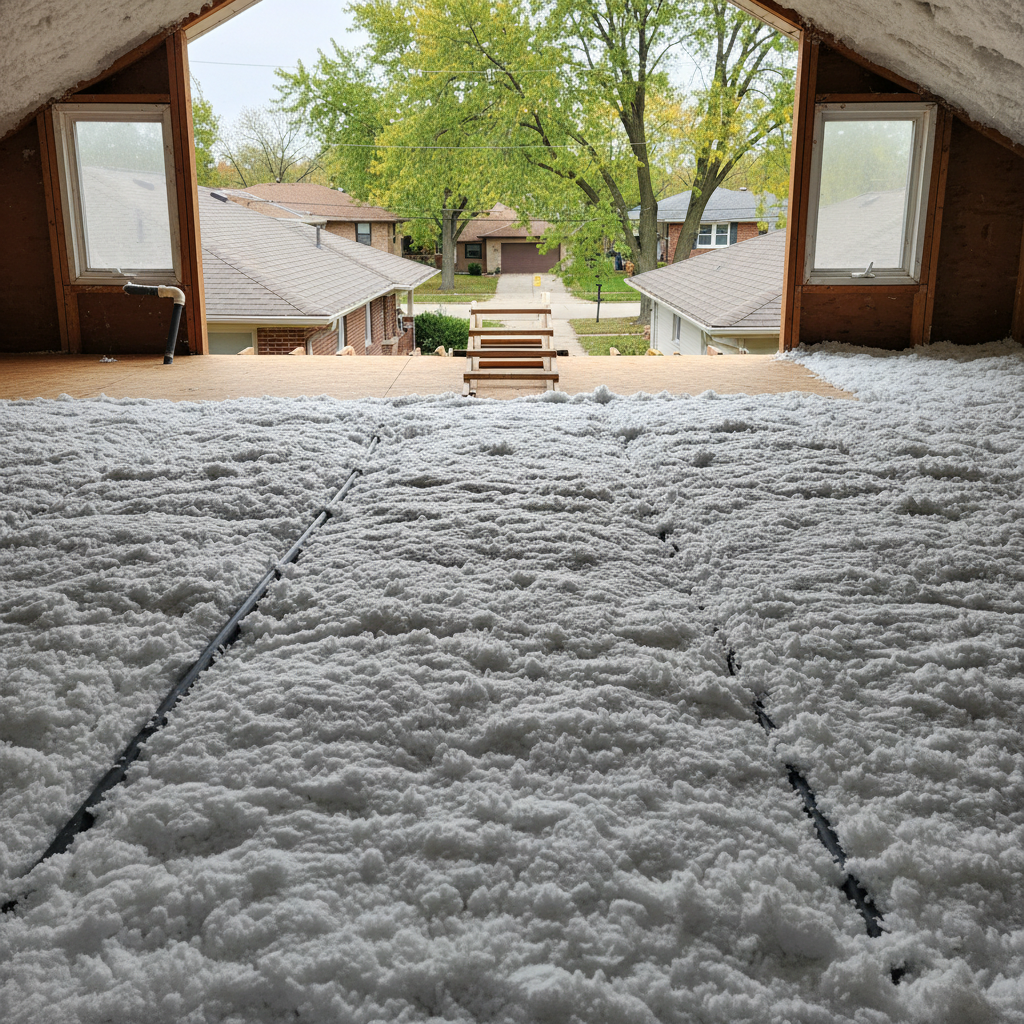
So, you've put in blown-in insulation — whether it's cellulose or fiberglass — and that's a smart move for your Elgin home. It really does a fantastic job of keeping things comfy and your energy bills down. But here's the thing: it's not totally maintenance-free. Think about your car; you don't just fill it with gas and never check the oil, right? Your insulation needs a little TLC to stay effective for decades.
Making Your Blown-In Insulation Last Longer
The good news? Blown-in insulation is pretty tough. It's built to last a long time, often 20-30 years or even more, especially when we install it right. The biggest enemies of insulation are moisture and disturbance. So, your main job is to protect it from those two things.
First off, keep your attic or crawl space dry. That means making sure your roof isn't leaking, your gutters are clean and actually sending water away from the foundation, and any plumbing pipes up there aren't dripping. Even a small, slow leak can saturate insulation over time. When that happens, it compresses and loses its R-value. We see this a lot in older homes around the Bluff City area, often because roof flashing has worn out.
Secondly, try not to mess with it. If you're up in the attic, step on the joists, not directly on the insulation. Compacting it, even just walking on it, really cuts down its effectiveness. If you're storing stuff up there, build a proper platform that sits above the insulation level. Don't just stack boxes right on top of it.
Checking Things Out: What to Look For
You don't need to be in your attic every week, but a yearly check-up is a solid idea. Maybe do it in the fall before winter really kicks in, or in the spring once the snow melts. Here's what I tell folks to look for:
- Even Coverage: Is the insulation still spread out evenly? Are there any bare spots or areas where it looks noticeably thinner? Sometimes, air currents or even small critters can shift it around.
- Settling: Blown-in insulation, especially cellulose, can settle a bit over time. If you remember how high it was when it was installed, check if it's significantly lower. A little settling is normal; a lot means it's lost some R-value.
- Moisture Stains or Mold: This is a huge red flag. Any dark spots, discoloration, or a musty smell means you've got a moisture problem. Find the source immediately.
- Pest Activity: Look for droppings, nests, or tunnels in the insulation. Mice, squirrels, and even raccoons love a warm, cozy attic, don't they? They'll compact, move, and soil your insulation, ruining its effectiveness and creating health hazards.
- Ventilation Blockages: Make sure your soffit and ridge vents aren't blocked by insulation. You need good airflow to prevent moisture buildup and ice dams, especially with our Illinois winters.
Signs You Might Have a Problem
Beyond your visual checks, your home will often tell you if something's off with your insulation. Pay attention to these signs:
- Spiking Energy Bills: If your heating or cooling costs suddenly jump, and you haven't changed your thermostat settings, insulation could be the culprit.
- Drafts or Uneven Temperatures: Are some rooms noticeably colder or hotter than others? Do you feel drafts even when windows are closed? This often points to insulation gaps or thinning.
- Ice Dams: This is a classic sign of poor attic insulation and ventilation. When heat escapes from your attic, it melts snow on your roof, which then refreezes at the colder eaves, forming those big chunks of ice.
- Pest Noises: Hearing scratching, scurrying, or chirping in your walls or attic is a definite sign you have uninvited guests.
- Musty Smells: A persistent damp or moldy smell, especially in upper levels or near exterior walls, means you've likely got a moisture issue affecting your insulation.
When to Call a Professional
Look, you can do a lot of these checks yourself, and I really encourage it. But there are times when you truly need to bring in the pros. Don't hesitate to call New Look Insulation Co. if you notice any of these:
- Significant Settling or Bare Spots: If your insulation has settled a lot, or you've got large areas with no coverage, you'll need more blown in. It's not a DIY job to get even, effective coverage.
- Persistent Moisture or Mold: You might fix a roof leak, but if the insulation is already saturated or moldy, it needs to be removed and replaced. Mold can be a serious health risk, and you definitely don't want it spreading.
- Pest Infestations: After you've dealt with the pests themselves (call an exterminator first!), the damaged and contaminated insulation needs to be removed and replaced. You can't just leave droppings and nests in there. We've seen some pretty nasty stuff come out of attics after a squirrel family moved in.
- Major Renovation: If you're doing a big remodel that exposes walls or the attic, it's a great time to have your insulation assessed and upgraded if needed.
- Unexplained High Energy Bills: If you've checked everything else and your bills are still through the roof, a professional energy audit, including an insulation inspection, can pinpoint the problem.
Your blown-in insulation is a long-term investment in your home's comfort and efficiency. A little preventative care and knowing what to look for will ensure it keeps paying you back for many, many years. Don't let those brutal Elgin winters or sweltering summers catch you off guard because your insulation isn't doing its job.